

-
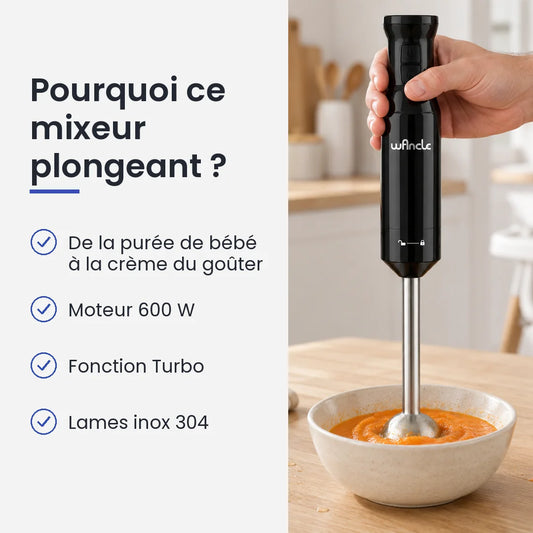
600 W Turbo Hand Blender and Chopper
Vendor:Hachoir CuisineRegular price $79.00 USDRegular priceUnit price per$99.00 USDSale price $79.00 USDSale -
5-in-1 Turbo Chopper Mixer 1500 W
Vendor:Hachoir CuisineRegular price $94.00 USDRegular priceUnit price per$118.00 USDSale price $94.00 USDSale -
4-in-1 Hand Blender and Chopper 1200 W
Vendor:Hachoir CuisineRegular price $108.00 USDRegular priceUnit price per$134.00 USDSale price $108.00 USDSale -
Baby food chopper mixer steamer
Vendor:Hachoir CuisineRegular price $109.00 USDRegular priceUnit price per$152.00 USDSale price $109.00 USDSale -
4-in-1 stainless steel 304 chopper mixer
Vendor:Hachoir CuisineRegular price $120.00 USDRegular priceUnit price per$147.00 USDSale price $120.00 USDSale -
4-in-1 Hand Blender and Chopper 1000 W
Vendor:Hachoir CuisineRegular price $127.00 USDRegular priceUnit price per$154.00 USDSale price $127.00 USDSale -
5-in-1 Electric Chopper and Grater
Vendor:Hachoir CuisineRegular price $172.00 USDRegular priceUnit price per$215.00 USDSale price $172.00 USDSale



What to know about this collection
Bisphenol A, or BPA, is a compound used to make certain rigid plastics, particularly polycarbonate, and certain resins. It is monitored because it can migrate from the container into food. In France, it has been banned from baby bottles since 2010, and from all containers and utensils intended to come into contact with food since 2015.
This is especially relevant for hot preparations, as heat promotes the migration of plastic components into food. Puree taken directly from a steamer, or soup blended directly in a bowl: these are exactly the situations concerned.
Stainless steel, glass, plastic: what really comes into contact with food
Stainless steel does not contain BPA. In this selection, the 600 W hand blender has 304 stainless steel blades, the 751 to 1,000 W 4-in-1 food processor has a 304 stainless steel body, and the 1,000 W 4-in-1 hand blender food processor has a stainless steel body. On the 250 W 5-in-1 electric food processor, the drums and blades are stainless steel, while the body is plastic.
Glass also does not contain BPA, and it allows you to see the texture while chopping. Our models with glass bowls are gathered in the electric food processor with glass bowl selection.
Plastic, finally, is not a single material. BPA is used to make polycarbonate, often marked PC, but not polypropylene (PP) or Tritan, a BPA-free copolyester. For a plastic part, the two things to look for are the "BPA-free" label and the name of the material.
For baby: hot preparations first
The 450 W baby food processor steams and then blends in the same 50 to 400 ml bowl, without transferring. The 600 W hand blender, with its Turbo function, blends cooked vegetables and fruit for baby meals. To limit hot contact with plastic, blend in the saucepan with a stainless steel blade attachment, or let the preparation cool slightly before pouring it into a plastic bowl. Appliances designed for babies have their own baby food processor selection, and our baby meal safety guide goes into detail about these precautions.
For the whole family
The two 4-in-1 food processors blend, chop, whisk, and mix. The 304 stainless steel model has 14 speeds, a 700 ml beaker, and a 500 ml chopping bowl. The 1,500 W 5-in-1 adds a measuring function, with 16 speeds, a Turbo mode, a 500 ml chopping bowl, and a 600 ml beaker. The 250 W 5-in-1 electric food processor, meanwhile, grates and slices vegetables and cheese with its stainless steel drums, without blending. All our combination appliances are gathered in the multipurpose food processor collection.
Frequently asked questions about BPA-free food processors
Which baby food processor should I choose to avoid BPA?
Choose an appliance whose parts in contact with hot food are made of stainless steel or glass: a hand blender with stainless steel blades that works directly in the saucepan, or a food processor with a glass bowl. For plastic parts, check for the "BPA-free" label or the indicated material.
How can I tell if a food processor is BPA-free?
Look at the material of each part that touches food. Stainless steel, glass, polypropylene (PP), and Tritan do not contain BPA. Polycarbonate (PC) may contain it. In the absence of any indication, the manufacturer's "BPA-free" label remains the only reliable indicator.
Is a plastic mini baby food processor suitable for hot preparations?
It is better to let the preparation cool slightly before chopping it in a plastic bowl, even if it is BPA-free. For hot blending, a hand blender with stainless steel blades directly in the saucepan avoids the issue.
Is BPA banned in France?
Yes. It has been banned from baby bottles since 2010, and from all containers and utensils intended to come into contact with food since 2015.