

-
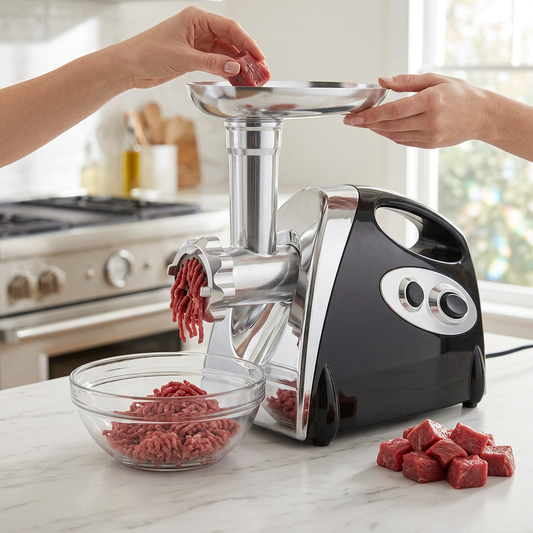
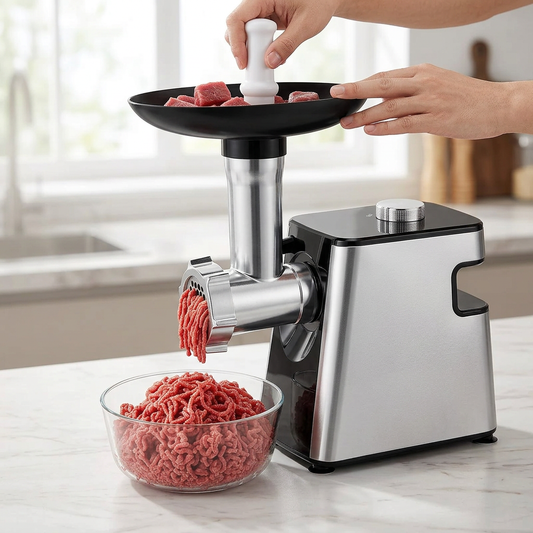
700 W electric meat grinder with kebbé kit
Vendor:Hachoir CuisineRegular price $139.00 USDRegular priceUnit price per$173.00 USDSale price $139.00 USDSale -
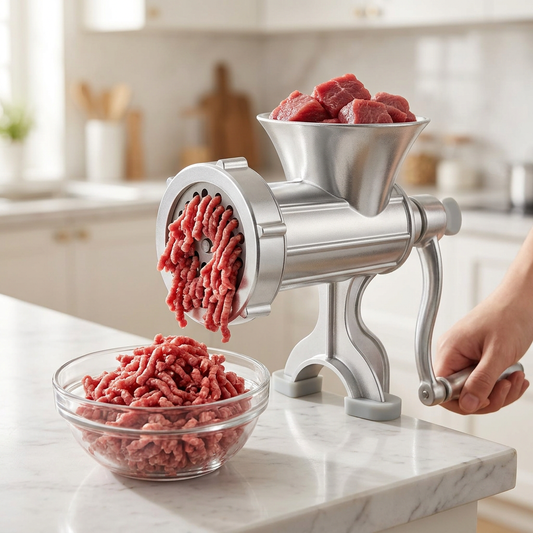
Manual aluminum meat grinder, 3 attachments
Vendor:Hachoir CuisineRegular price $67.00 USDRegular priceUnit price per$83.00 USDSale price $67.00 USDSale -
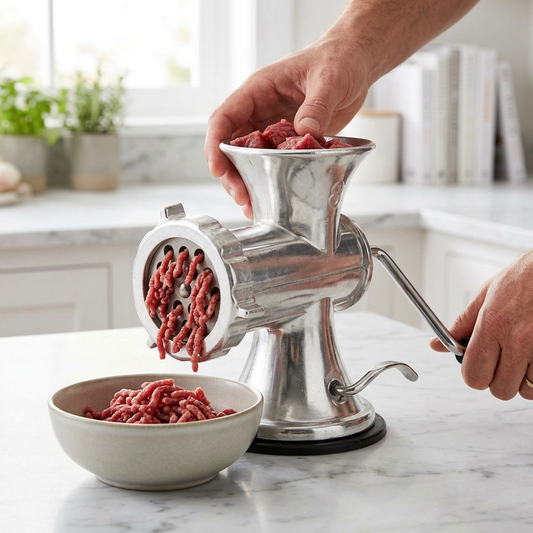
Manual aluminum meat grinder with suction cup
Vendor:Hachoir CuisineRegular price $83.00 USDRegular priceUnit price per$102.00 USDSale price $83.00 USDSale -
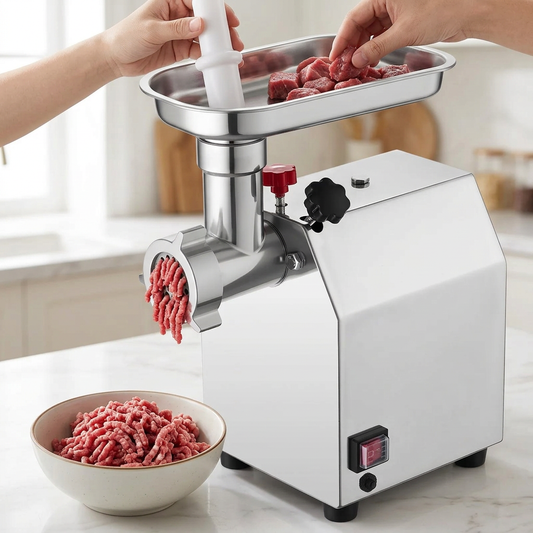
Pro stainless steel electric meat grinder, size 8, 12, or 22
Vendor:Hachoir CuisineRegular price From $227.00 USDRegular priceUnit price per$283.00 USDSale price From $227.00 USDSale -
4-in-1 stainless steel electric meat grinder, grater drums and slicer
Vendor:Hachoir CuisineRegular price $115.00 USDRegular priceUnit price per$142.00 USDSale price $115.00 USDSale -
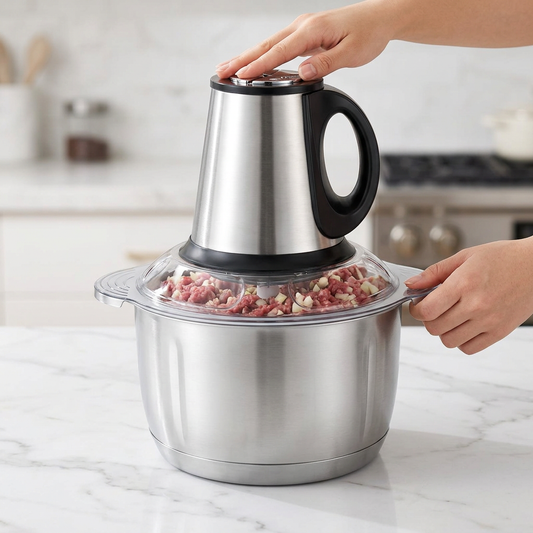
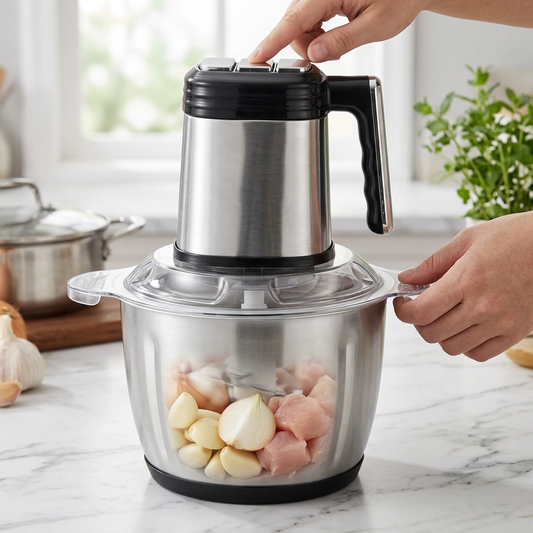
5 L 500 W stainless steel electric chopper with handle, 5 blades
Vendor:Hachoir CuisineRegular price $69.00 USDRegular priceUnit price per$85.00 USDSale price $69.00 USDSale -
3 L stainless steel electric chopper, 3 speeds, safety lock
Vendor:Hachoir CuisineRegular price $75.00 USDRegular priceUnit price per$93.00 USDSale price $75.00 USDSale -
Manual suction meat chopper, orange
Vendor:Hachoir CuisineRegular price $52.00 USDRegular priceUnit price per$64.00 USDSale price $52.00 USDSale -
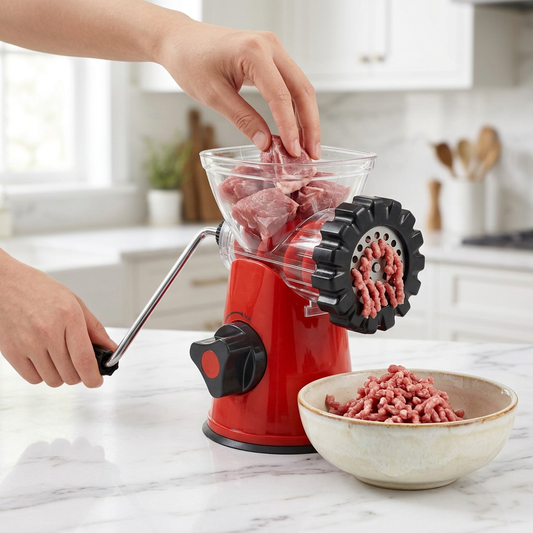
Manual meat grinder with red suction cup, with sausage attachment
Vendor:Hachoir CuisineRegular price $68.00 USDRegular priceUnit price per$84.00 USDSale price $68.00 USDSale









What to know about this collection
A meat grinder allows you to grind your own fresh meat rather than buying pre-ground meat. Two mechanisms achieve this. On a grinder with a plate, an auger pushes the pieces toward a perforated plate, where a blade slices them as they pass through: the texture then depends on the diameter of the holes, not the power of the device. On an electric bowl grinder, rotating blades grind the meat directly in the bowl.
What changes from one model to another is the throughput, the effort required, and the volume processed in one session. This page brings together our manual and electric meat grinders, with the guidelines to choose the one that truly suits your way of cooking.
Manual or electric meat grinder: which one to choose
The choice is not about the quality of the grind, which is comparable, but about the volume and the frequency.
A manual meat grinder comfortably processes 500 g to 2 kg per session. It consumes nothing, makes no noise, disassembles into four pieces, and stores in a drawer. Its lesser-known advantage: the meat does not rise in temperature, because there is no motor that heats up. On a stuffing or tartare, this preserves the texture. In return, the effort at the crank is noticeable beyond two or three kilos at a time.
An electric meat grinder takes the lead as soon as you regularly exceed 2 kg, or if you prepare charcuterie in series. The throughput becomes continuous, without physical effort. However, you have to find a place for it, plug it in, and completely disassemble it after each use.
Grinder with a plate or electric bowl grinder for meat
Grinders with plates, manual or electric, remain the reference for raw meat in quantity. They work in continuous flow, keep the same texture from the first to the last piece, and accept sausage funnels: it is the right choice for homemade charcuterie and sessions of several kilos.
Electric bowl grinders grind the meat in pulses in a bowl of 2 to 5 liters, with stainless steel blades on one or two levels. They do not allow stuffing, but they prepare in a few seconds the meat for a stuffing, meatballs, or homemade ground steak, and are also used for vegetables and dried fruits. The multifunctional models, with their 500 ml grinding bowl, and the compact formats are suitable for small portions.
In both cases, a very cold meat, cut into regular cubes, gives a clean grind rather than a crushed one. On a bowl model, work in short pulses to keep the grain.
The criteria that really matter
The plate, which decides the texture
This is the most important and most often overlooked parameter. A fine plate of 3 to 4.5 mm gives a smooth texture for pâtés, terrines, and stuffings. A medium plate of 6 to 8 mm is suitable for ground steak, meatballs, and sauces: it is the one mounted by default on most devices. A large plate of 10 to 12 mm is reserved for sausages and coarse meat, which keeps its juices during cooking.
A model delivered with two or three plates covers all preparations without additional equipment.
The size of the body, from no. 5 to no. 22
Grinders follow a numbering that designates the diameter of the grinding body, therefore the size of the compatible plates. The no. 5 is suitable for small quantities, the no. 8 is the reference in family cooking, the no. 10, no. 12, and no. 22 increase in throughput and size. A plate is never universal: it must match the number of your device.
The power, for electric models
Below 500 W, a motor struggles with raw meat and sinewy parts. Between 500 and 800 W, you cover common family uses. Beyond 750 W, the device handles 2 to 3 kg continuously without a thermal break, which becomes useful if you prepare several days in advance.
Grinder or meat chopper: two names for the same tool
Depending on the regions and habits, the same device is called a meat grinder, meat chopper, or grinding machine. Behind the three names, the same plate mechanism: the auger that draws the meat toward the knife-plate assembly. What changes from one model to another is therefore never the name, but the size of the body, the material, and the mode of drive, crank or motor. If you are looking for a chopper for the home, the guidelines on this page apply identically: plate according to the desired texture, size according to your volumes, power according to your frequency.
Intensive use: when to switch to a more powerful model
A household that prepares its charcuterie in series, rations for its animals, or several kilos every week goes beyond the classic family framework. Three criteria then make the difference: a motor of 1500 W and more that handles kilos without a thermal break, a no. 12 or no. 22 body with higher throughput, and a metal transmission that handles long sessions where plastic gears wear out. The all-stainless steel disassembles and cleans faster, a detail that counts when the device is used several times a week. Our guide to the professional meat grinder details these criteria.
What we gain by grinding our own meat
The first benefit is the mastery of the cut and the fat content. You choose the shoulder, the paleron, or the top round, and you decide the percentage of fat instead of accepting it. A homemade ground steak at 15% fat content has nothing to do with a standardized industrial product.
The second is the freshness. Ground meat oxidizes quickly: ground at the last moment, it keeps its color and taste. This is decisive for a tartare, where freshness also conditions food safety.
The third is economical. A whole cut costs significantly less per kilo than prepared ground meat, and the gap widens on braising cuts. With regular use, a manual grinder pays for itself in a few months.
The preparations that a meat grinder allows
Beyond ground steak, the auger and accessories open up the entire repertoire of homemade charcuterie: sausages stuffed in casing, lamb merguez, country pâté, rillettes, and terrines.
One piece of advice that applies to all these recipes: pass the meat cut into cubes 15 to 20 minutes in the freezer before grinding it. A firm meat slices cleanly instead of being crushed, and the result is immediately more regular.
To choose the right diameter according to the recipe, our guide details which plate to use for each preparation.
Frequently asked questions about the meat grinder
Which meat grinder to choose for the home?
For a household that grinds between 500 g and 2 kg per session, a manual meat grinder in size no. 8 is enough: it consumes nothing, makes no noise, and stores in a drawer. If you regularly exceed 2 kg or prepare charcuterie in series, switch to an electric model with a 500 to 800 W plate.
What power for an electric meat grinder?
Below 500 W, the motor struggles with raw meat and sinewy parts. Between 500 and 800 W, you cover common family uses. Beyond 750 W, the device handles 2 to 3 kg without a break, which becomes useful for preparing several days in advance.
How to assemble a meat grinder?
Slide the auger into the body, place the knife on the shaft, flat side facing the plate, place the plate, then screw the ring by hand, without forcing. A knife mounted upside down crushes the meat instead of slicing it: it is the most frequent cause of a grind that comes out as mush.
How to grind meat without a grinder?
With a chef's knife: cut the very cold meat into small cubes, then chop it by regularly folding the pile toward the center. The result is good but the gesture is long beyond 500 g. An electric bowl grinder, used in short pulses, also helps for small quantities.
How to clean a meat grinder?
Disassemble it as soon as the grinding is finished, before the residues dry, wash the pieces in hot soapy water and dry them immediately. Passing a slice of bread at the end of the session pushes the last pieces stuck in the auger. Our guide explains how to clean an electric meat grinder piece by piece.